
- Writing data to the parameter RAM isn't an issue in itself, but it can be a source of problems when you change multiple items on your Mac. For instance, if you install new RAM and then remove a RAM stick because it's bad, the parameter RAM may store the wrong memory configuration. Likewise, if you select a startup volume and then later.
- I recently switched over to Mac, and purchased a new MacBook Pro, but found that the computer did not have enough ram for everything I am doing (large photoshop files etc.) I was wondering if there is any way that I could get external ram or some type of upgrade for my computer.
- External Ram For Mac Mini
- External Ram For Macbook Air 2013
- External Ram For Macbook Pro 2018
- External Ram For Macbook Pro
- External Ram For Mac
Ways to Use an External Hard Drive as RAM
Yes, and this is usually because a Mac requires fully buffered ECC (error-correcting) memory as a hardware system requirement. The price difference between Mac and PC memory isn’t nearly as wide as one would think. 8GB of Kingston PC2 5300 fully buffered Mac memory at the time of this writing is $19.49.
There are two types of computer memory, namely physical and virtual memory. The RAM chips attached to your motherboard represent the physical memory, whereas the virtual memory comes from the reserved space within your hard drive. When a program is not in use but open, the Windows system uses the virtual memory to store its data.
Now, if you have an old computer with little RAM, less than 4GB, to be precise, then you need to upgrade your device by increasing virtual memory using your external hard drive. There are a lot of untrustworthy theories about boosting this and that on your computer to make it better. In most cases, the misleading of readers comes from the wrong presentation of information, whether intentional or unintentional. For instance, in this case, increasing virtual memory will not increase the memory inside the RAM chips. Actually, the RAM chips’ capacity cannot be changed unless they are taken back to the manufacturing company for reconstruction. Therefore, this article is focusing on adding virtual memory using an external hard drive. So, how does using an external hard drive increase RAM and improve performance?
Well, with more virtual memory, a computer is able to multitask, therefore completing tasks faster. If a program is open but idle, the computer can shift its data to virtual memory, thus relieving the physical RAM. Thus, when properly configured, your PC will improve its performance. Now, for you to understand things better, let’s first explain how virtual memory works before diving deep into the setup procedure.
Virtual memory is kept in a system file called pagefile or paging file. Virtual memory is not accessible to the user and can only be accessed under two circumstances: when the physical RAM is overloaded and when there are programs that are open but idle. So, the first scenario is common among old PCs that have little physical RAM. When your computer is running low on physical memory, the newly generated data from programs that are being opened still needs to go somewhere. You may wonder, why not just increase physical RAM? Remember, old computers have a limited RAM volume, i.e. on some old PCs, motherboards can only take up to 2GB of RAM. Therefore, you are only left with virtual memory. Anyway, back to our case: so, once the physical RAM is left with no space, Windows turns to paging files, which opened programs will use as if they were physical memory. When an open program is minimized or not in use for some time, its data is moved from RAM to virtual memory, hence space for other applications and important system operations. This, in turn, helps the whole computer system to run efficiently.
Virtual memory plays a pivotal role in keeping your PC operations smooth. Although some websites discourage the use of paging files, this can prove to be a bad idea in the long run. If there is no paging file in your system, then you will likely experience slowdowns, errors, freezes, and even crashes leading to data loss. Even if you have a large amount of physical memory, leaving breathing space for it by implementing virtual memory will help keep your computer healthy. Note that, if your paging file is small, you might also experience these problems, hence the need to know the right size to set your virtual memory because setting it too high may also lead to issues.
There are other facts that you need to consider when it comes to virtual memory before setting it up. One of the major misinterpreted concepts about virtual memory is the thought that it operates the same way as physical RAM. However, virtual memory can never substitute RAM, and it is slower. Even if used on the fastest solid-state drive, it will remain slower than physical memory. Therefore, if your computer is slow due to not having enough physical RAM memory, having a well-setup paging file will only help in stabilizing and bettering its performance but will definitely not make it much faster.
There isn’t a specific amount of virtual memory that can be labelled as best for any PC. Therefore, the amount of virtual memory you need depends on your user needs. To be precise, the amount of virtual memory you need depends on the amount of physical RAM you have and how much memory you usually use. For instance, if you have 6GB of RAM installed and your max memory usage is capped at 9GB, it would be best to set your paging file memory to 4GB. This means, in total, you will have 10GB, giving you an extra GB to be on the safe side.
How to Use a Hard Drive as RAM on Windows
Here is how you can set up your external hard drive as RAM to enjoy a more stable computer:
Step 1
- Access the Start menu and right-click on Computer.
- Select Properties and then choose Advanced system settings.
- If prompted, enter the admin password.
Step 2
- Under System Properties, select the Advanced tab.
- Choose the Settings button under the Performance category.
Step 3
- Select the Advanced tab and choose the Change button located near the bottom of the window.
- Find and uncheck the box labelled Automatically manage paging file size for all drives.
Step 4
- Find and choose the external hard drive from the list.
- Select System managed size, and your PC will allocate virtual memory on the external hard drive.
- To allocate a customized virtual memory volume, select Custom and enter the minimum and maximum amount of your memory and choose Set.
- Click on OK and then restart your computer for the settings to take effect.
| FileWhopper - Send Large Files Fast and Securely |
|---|
| Sending large files and folders online can be stressful. Most of the trusted services require paying heavy fees before accessing their services. However, with FileWhopper, you get to access premium features with no subscription needed: it’s a pay-as-you-go service, so you pay only when you need to transfer large files or folders, and the price is based on their size. You can literally send data of any size securely to up to 8 recipients and choose it to be stored for up to 90 days. The process is simple to follow, and there are safety measures employed to protect your data. |
| Here is how it works: · Visit the FileWhopper website, select the file or folder you want to share and upload it to FileWhopper to get a price quote that is based on the size of the uploaded data. · Upload the file or folder you wish to send using the FileWhopper app. · Once the upload has started, it’s the right time to share the download link and the password for decrypting your content with your recipient(s) as the app supports simultaneous upload and download. · Upon closing the upload app, it automatically gets deleted from your computer. The download link can also be found in your personal account. And please double-check that you have saved your password. |
Ever since computers have been around, RAM (or Random Access Memory) has been the one defining factor associated with loading performance and your computer's ability to quickly access information or display the desired output.
Today we will talk about something related to Mac RAM upgrading. If you had lots of Mac memory, you were the 'fastest kid on the block' or something along those lines. And this still holds true today.
We will discuss 2 key ways through which you can effectively add RAM to your MacBook Pro, iMac or MacBook Air.
- Part 2. The Cheapest and Easiest Way to Get More Mac RAM with Software
Part 1: Knowledge of RAM
Random Access Memory (RAM) refers to a small, replaceable circuit board inside your computer that gives your Mac temporary workspace - that is, a place where data is temporarily stored. That is why the data can be quickly loaded and accessed. So for example, when you launch an app or do anything else that requires you to load data, your Mac brings RAM into play to store any relevant data while it continues to work with it. Modern computers often come equipped with 4, 8, 16 or more gigabytes of RAM pre-installed.
More available RAM means you can run larger and more apps and programs simultaneously, without slowing down your Mac or waiting for long disk load operations before you can actually access or start using a specific program.
Should I Do a Mac Memory Upgrade?
If your system is running low on RAM, you will experience slowdowns when launching programs, loading documents, and otherwise using your system. It makes sense to upgrade your RAM - because more RAM means faster CPU access times and as a result, your storage media also works faster. We can know the details at below:
1. Take More Multitasks
The more physical RAM you have installed, the more programs you can run at the same time, and with more efficiency as well. This can be particularly useful if you work a lot with photo editing software like Photoshop or you have too many browser windows and tabs opened at the same time, along with the usual word processor or presentation software running in the background.
2. Open Programs Faster

Naturally, adding memory to your iMac can launch your programs faster ' something which can be a frustrating ordeal otherwise when you're working with a program that's memory-intensive.
3. Get Better Gaming Performance
This may not be seen as a potential advantage by everyone. But if you also use your Mac for entertainment, then you can expect games to generally perform better, run smoother and of course, load faster between screens.
4. More productivity
3D modeling and photo editing software are just two examples of applications that suck up a lot of resources. Having more RAM means you can stay productive as you won't have to wait too long for things to load.
Part 2: The Cheapest and Easiest Way to Get More Mac RAM with Software
The easiest and most cost-effective way to increase Mac RAM is to release more internal memory space on your Mac. With longer operation times, more memory can get clogged up. Using a professional tool like iMyFone Umate Mac Cleaner, you can free up unused RAM on your computer and instantly see noticeable performance gains.
Advantages of using iMyFone Umate Mac Cleaner:
- It support all Mac models and versions
- Very straightforward operation, allowing you to free up memory in a single operation or in bulk
- Very easy for new users and you can free up RAM yourself without any technical knowledge
- The low-cost tool that offers amazing features for a lifetime
- Lists out all apps and processes which are eating up RAM larger than 50MB
- Shows real-time statistics to help you manage RAM
- All-in-one Mac manager helps to delete large and unnecessary files, duplicate files, private data that's no longer needed, junk files, etc. It helps to manage all apps and extensions on your computer which are occupying too much memory.
- Helps you get twice as much RAM
Here is how to download, install and use this tool to increase Mac RAM
- Download the tool by clicking the above button.
- Launch Umate Mac Cleaner and click on 'Speed Up Your Mac' on the left panel.
- Click on 'Start Now'.
- It will show you all the programs that can be closed to release more RAM. Click on 'Free Up RAM'.
Now, you have got the super easy steps to increase Mac RAM. Of course, if you don't want to adopt the simple way we mentioned above, there is another relatively hard way to add RAM to your Mac. Next, we are going to tell you something you should pay attention to when doing Mac memory upgrading.
Part 3: Complex and Expensive Way: Manually Add RAM to your Mac/MacBook
Unlike using the solution to increase RAM with software, adding RAM to Mac is a hard way for most of us. We can conclude this way as a high-cost, complex and technology necessary method. If you don't mind spending extra cash and arming yourself with some technical knowledge, then here's how you're going to physically do a Mac memory upgrade:
3.1 Preparations before Mac Memory Upgrading
1. To prevent damage from static electricity, shut down your Mac (without removing the Mains plug) and wait for at least 10 minutes.
2. Keep your new RAM in its packaging right up until you're about to install it.
3. Touch an unpainted metal surface in your Mac to discharge any remaining static in your body.
4. When mounting your RAM into the slot, ensure that the gap in the front-facing gold contacts matches up with the protrusion in your motherboard's RAM housing.
3.2 Check the Actual Expandable Size of Your Mac
Access the Apple menu and select 'About this Mac'. Under the Memory tab, you can access a variety of information about your RAM, including the maximum it can hold.

Alternatively, you could also visit Apple's web support.
3.3 Check if Your Mac Models Can be Upgraded
You can use the same Apple menu and pull down the 'About this Mac' option to see if your model can be upgraded. Below the current memory size, if you see slots that say 'Empty', that means your Mac is upgradeable. Also, you can check the list we have posted below.
With some Mac models, the RAM is fixed into place and not upgradeable. Check the list below to know if your Mac models can be upgraded.
External Ram For Mac Mini
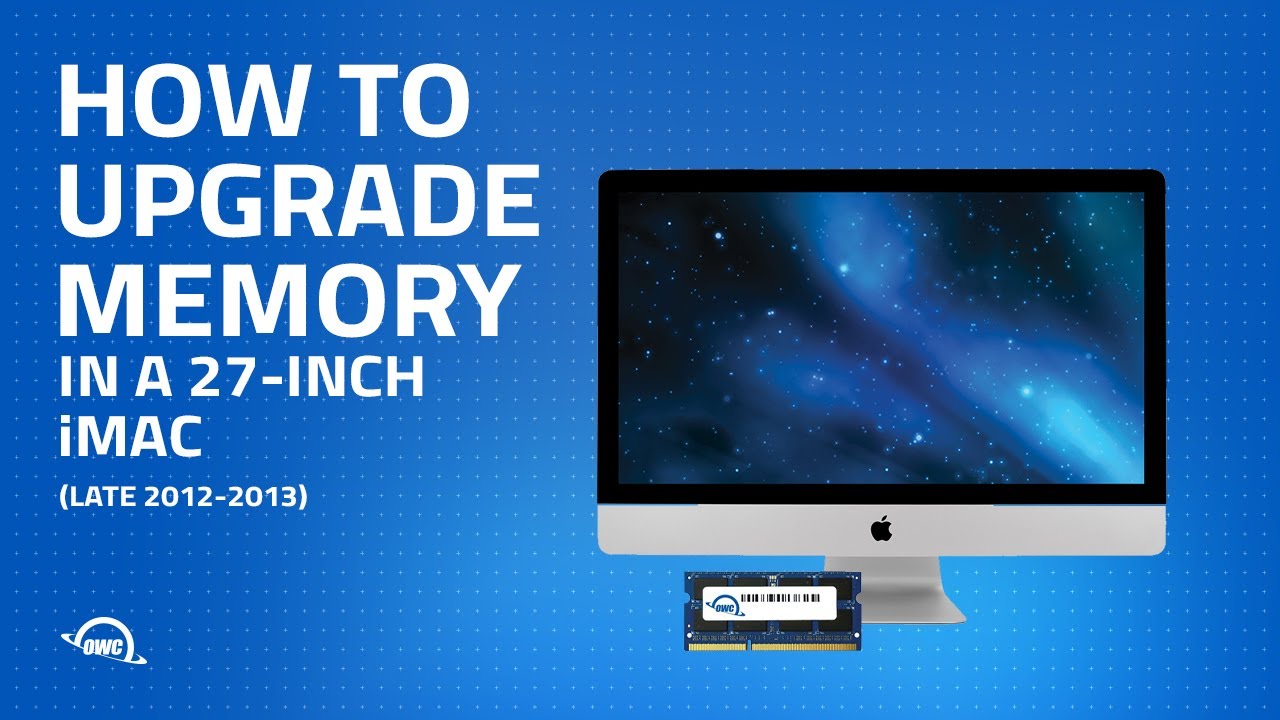
Some iMacs, like all the 27' models, have an access panel specifically for adding RAM. And it takes only a few seconds to pop that panel off. Other models, like the latest 21.5' iMac models, require you to remove the screen and logic board which may take at least a few hours. As things stand now, you can upgrade the RAM yourself in the following Mac models:
- MacBook Core 2 Duo
- MacBook Unibody
- MacBook Pro 13' (Mid 2009-Mid 2012)
- MacBook Pro 15' (Late 2008-Mid 2012)
- MacBook Pro 17' (All Models)
- iMac 17' (All Models)
- iMac 20' (All Models)
- iMac 24' (All Models)
- iMac 27' (All Models)
- Mac Mini (Mid 2010-Late 2012)
- Mac Pro (All Models)
Because Apple has taken to soldering the RAM to the motherboard of the computer - particularly on laptops in the last few years. You currently cannot upgrade the RAM yourself in these Mac models:
- iMac Pro (All Models)
- Retina MacBook (All Models)
- MacBook Air 11' (All Models)
- MacBook Air 13' (All Models)
- MacBook Pro 13' with Retina Display (All Models)
- MacBook Pro 13' with Touch Bar (All Models)
- MacBook Pro 15' with Retina Display (All Models)
- MacBook Pro 15' with Touch Bar (All Models)
3.4 Steps to Install More RAM
- Completely shut down your Mac.
- Turn your computer over so that the back is facing you.
Remove all the screws to take the case off.
Discharge any static electricity in your body by touching a painted metal surface inside your Mac.
- Align the notch on the gold edge of the module with the notch in the lower memory slot.
- Tilt the card and push the memory into the slot.
- Use two fingers with a firm, even pressure to push down on the memory module. There should be a click when you insert the memory correctly.
Repeat this procedure to install an additional memory module in the top slot. Press down on the module to make sure it is level.
- The last step is to replace and tighten the ten screws you removed earlier, making sure to put the different length screws in their proper locations.
That's how to upgrade Mac RAM t get more running space! If you have any question about the steps on how to install RAM on Mac, then you can check the Apple official guide for details.
Important
External Ram For Macbook Air 2013
If you apply the manual way to upgrade RAM, there truly exist some risks. We can have an idea as follows:
1. You may damage your Mac
There's a good chance that you may damage the really expensive and fragile components inside your Mac if you don't exercise certain antistatic precautions and general care.

Even if you do take all the necessary precautionary measures, you are still undertaking the task of a MacBook pro memory upgrade on your own. If you inadvertently damage anything in the process, the repairs will not be covered under your warranty.
2. Installing the wrong RAM
Not all RAM modules are made the same. Install the wrong-spec RAM, and you may irrecoverably damage the RAM module itself as well as some of the components inside your computer. Furthermore, you may also be looking at a string of hardware and software corruption issues that can be costly to fix.
External Ram For Macbook Pro 2018
3. Some Macs Are Not Upgradeable
Whether or not you can upgrade the RAM in your Mac—and how easy it is to do so—depends entirely on the model. Some iMacs, like all the 27” models, have an access panel specifically for adding RAM. And it takes only a few seconds to pop that panel off. But for some other models, they are not supported to upgrade or install more RAM. There will be a detailed list for all supported Mac models on part 3.
4. It's complex, technical and expensive
By not knowing which RAM module to use in your computer or not understanding whether your computer allows RAM upgrades, you are taking a colossal risk. Besides, buying genuine mac memory upgrades from an authorized dealer can be very expensive.
For these potential risks of upgrading Mac RAM in a manual way, we recommend increasing Mac RAM with software solution - Umate Mac Cleaner.
External Ram For Macbook Pro
In Closing
External Ram For Mac
Freeing up RAM on your MacBook Pro, iMac, or MacBook Air is as simple as knowing what RAM module to use and how to install it. However, for the easiest, cheapest and most hassle-free way to free up Mac memory, we'd still recommend iMyFone Umate Mac Cleaner.